
Vision Zero and Traffic Death Prevention
Current State of Denver Roads
If you haven’t seen the signs or the persistent social media posts about Vision Zero, then you have definitely seen changing road shapes around the Denver Metro area. Extra bike lanes are going in, barriers between motor and bike lanes are building up, speed barriers are popping up, and speed limits are dropping. This is all part of Denver Public Work’s efforts to stamp out traffic collisions and deaths, bringing the later to “Zero.” According to the City and County of Denver, an auto collision has a 40% Chance of causing serious or fatal injury at 30 mph. That stat, however, skyrockets to 73% just by increasing the speed to 40 mph. In the Denver city limits, as of October 12, 63 people have died in collisions, and since 2016, 41% of those were due to speed. Fatalities have continued to increase every single year for the last nine years. Of the 63 fatalities so far this year, 2 were cyclists, 17 were pedestrians, 15 were motorcyclists, and 29 were vehicle occupants.
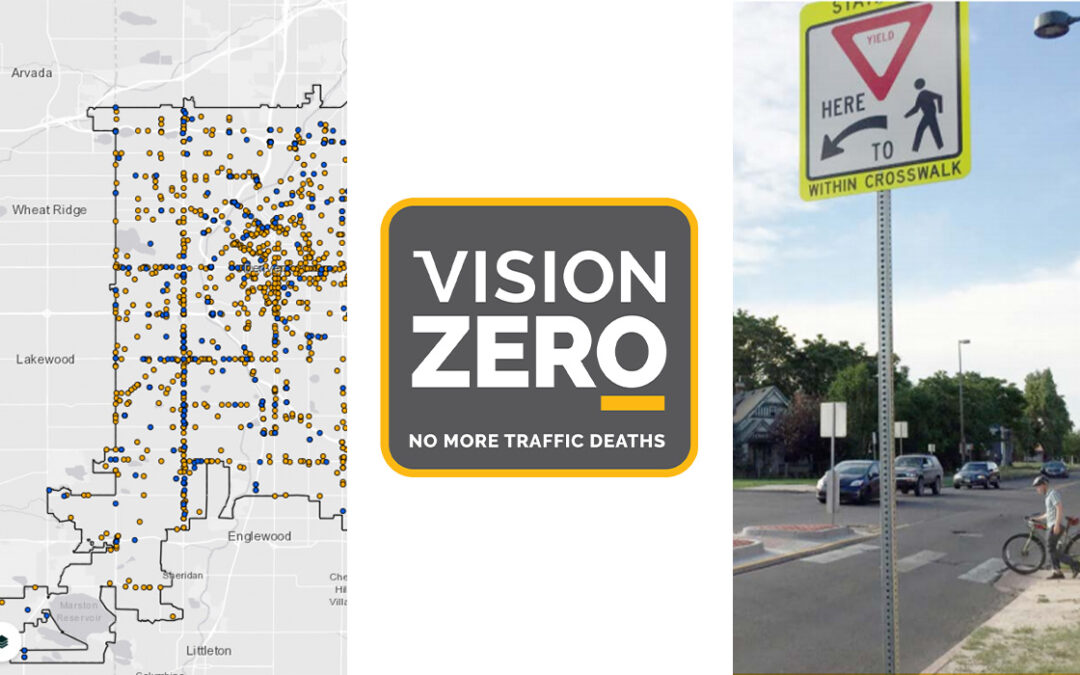
Denver Vision Zero has set a county-wide goal to have zero traffic deaths by 2030. Rather, though, than simply announce a lofty goal and simply flash stats on overhead announcement boards on the highways, the City and County of Denver have enacted an Action Plan to take proactive steps towards the goal. The first step involved analysis. Vision Zero members analyzed not only fatal collisions themselves looking for causes, but they also constructed a map of the areas within the county lines at which there were serious or fatal collisions over the last six years. You can find this map below or interact by clicking here. You can clearly note roads like Federal, Colfax, and 6th Avenue lighting up like a light-bright as hotbeds for major collisions. In fact, an ancillary map highlighting just the routes labeled High Injury Network zones (HIM), shows that while these roads account for only 5% of Denver streets, the account for 37% of fatal collisions and 40% of serious injuries. And county-wide, motor-vehicle collisions account for twice the number of deaths than homicide. In fact, traffic collisions are the #2 leading cause of hospitalizations in Denver County.
It is also interesting to note that Vision Zero identified that most collisions in these HIN routes are crashes happening near schools and in neighborhoods primarily comprised of lower income, disabled, and elderly citizens. In these areas, speed, aggressive driving, distracted driving, and impaired driving were the top causes of serious and fatal collisions.
What are the next steps in the Action Plan?
The five priorities within the action plan, laid out for the public here, are:
- Enhance City Processes and Collaboration
- Build Safe Streets for Everyone
- Create Safe Speeds
- Promote a Culture of Safety
- Improve Data and Be Transparent
How does this translate into increased safety and less traffic collisions?
To the city and county government, enhancing city processes and collaboration includes adding departments within local governments focused primarily on traffic safety, including studies, economic appropriation, and governmental reaction to tragedies. And the “building safe streets for everyone” phase is already visible in many neighborhoods. Vision Zero has already begun re-configuring streets and intersections to reduce speed, enhance bicycle and pedestrian detection, and improving light and visibility at crossings. A part of phase two is also significant enough to the effort for Vision Zero to make a separately delineated phase. Creating safer speeds city-wide has begun in several parts, with greater speed enforcement, lower speed limits in neighborhoods and school zones, and street design changes to create safer cycling and walking lanes and force lower speeds for vehicles though the use of barriers and speed bumps.
The next phase seems tricky, and it is the opinion of Queener Law that the city has failed already in some aspects of the promotion of a culture of safety. When e-bikes and scooters hit the streets of Denver, the city was behind the eight-ball with education and regulation. Since then, the city has tripped over itself, releasing multiple complicated ordinances for how these multi-modal measures should interact with other established traffic, and education of the community has failed in spade. Traffic collisions involving scooters and bikes have continued to rise. Vision Zero intends to correct those mistakes, and make better efforts to educate and make available alternate modes of travel outside of driving. It is the opinion of the Vision Zero team that multi-modal methods will not only reduce traffic, but they should also reduce traffic deaths, aggressive and impaired drivers from occupying the road, and give a broad range of safe methods of transportation to the HIN zones.
Finally, Vision Zero does not intend to rest on the current data and act accordingly. They are making a promise to the community to continue the analysis and make honest reports to the public of the successes, failures, or stagnation of their efforts. Many more details of the Action Plan are available here. And Queener Law occupies a position on the Mobility Council for the Downtown Denver Partnership, an organization that tasks itself with advising local leaders of what our community members are thinking and feeling about the government’s actions with regards to safety. Take a look at what the local government has planned for your neighborhood, and let us know your thoughts. Queener Law will take them back to the Partnership and push for the government to be advised. We will ensure the government hears us, and therefore hears you, about our collective safety. Traffic collisions are not an inevitability. How do you think we can prevent them?
Urban Avalanches: Colorado Passed Milestones
Urban Avalanches: Colorado Passed Milestones
The clouds are rolling in and more of the powdery white stuff is on the way… snow, that is. This week may bring another 6” of snow to Denver, and this week’s storms are also bringing high winds of over 40 mph. Wind gusts are more dangerous to your commute than you might think. While no one loves driving in windy conditions that whip their car around, especially when passing a large truck or bus. Wind also sweeps snow onto the roadways, cooling and patting it down, creating icier conditions than snow alone. But the bigger issue in the news lately has been avalanche danger. Typically relegated to back country skiing, there have been numerous tragic avalanches across Colorado roadways this month.
In addition to the road closures, just this weekend, the Denver Post reported several injuries and one fatality related to “roof avalanches.”
Two men were working to create a safer environment for others in Crested Butte by clearing snow from a commercial building roof when they were trapped in a slide themselves. One was injured, while the other suffered fatal injuries. Avalanche warnings were seen this season for the first time just weeks ago, but have been continually expanded as snow reports continue. In today’s media, the word “historic” may seem cliché at best, but the avalanche dangers in our state are truly that. Colorado has already surpassed the last several record years for the number of avalanches, and is quickly approaching the heartbreaking records set for injuries and death.
Why are we seeing so many monster snow waves sweeping across our highways? According to the National Weather Service, we are in the midst of a perfect storm.
It’s not just anecdotal that the memes showing a tropical paradise on the sunny side of the street with an arctic freeze on the other side seem to accurately describe Colorado weather. And that is the perfect recipe for avalanche disasters. Simple avalanches are caused by high snowfall, usually in a rapid manner.
But the Colorado weather recipe of alternating cold to moderate temperatures destabilizes the layers of the fluffy stuff, causing a freeze-to-melt pattern made perfect for a slide.
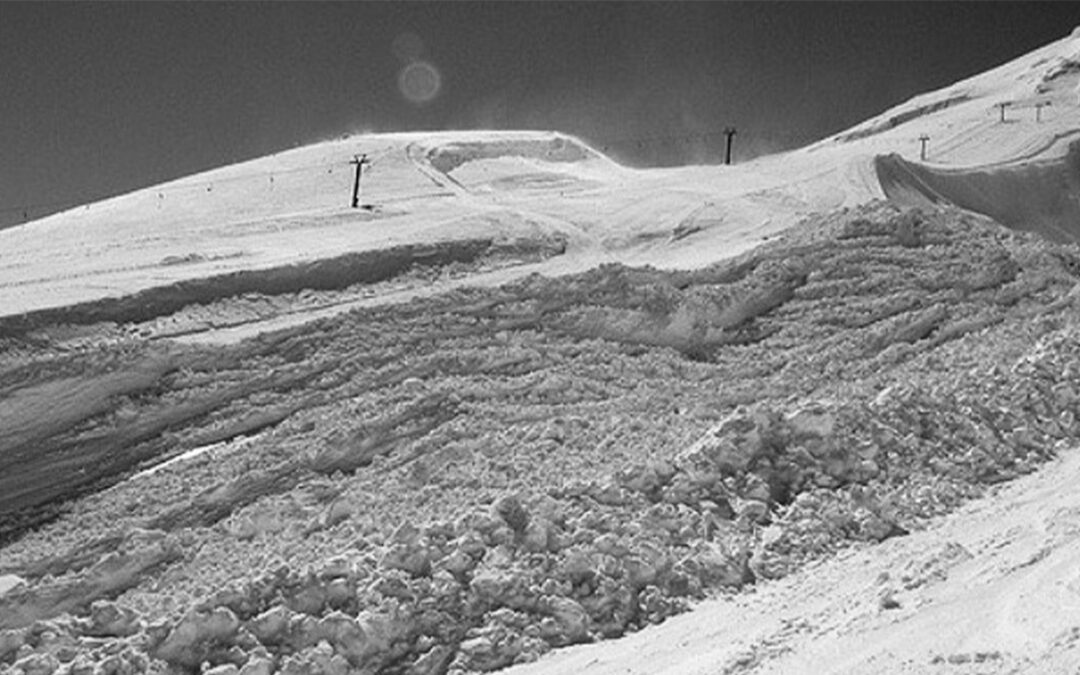
The instability results in a snow break, which is marked by a separation of the unstable snow from more stable packed snow. This most commonly occurs within 24 hours of the snowfall because the overload of the new snow weakens the melt-to-freeze-to-melt layers beneath. When these conditions are combined with wind, further increases in temperature, and other natural conditions like lack of vegetation and slope steepness, you see the types of dangers we have been facing this month in Colorado. The weather forecasts this week are calling for a continuation of these perfect conditions. Heavy winds, rapid drops of large amounts of snow, coupled with temps that are forecast to fluctuate over 25 degrees in a single day — an avalanche’s delight. According to the Colorado Geography Survey’s Colorado Avalanche Information Center (CAIC), unstable snow pack can cause a slide of up to 200 mph of blasts able to destroy structures and trees. Even the blast of air that precedes the slide can be destructive in itself. In the past few weeks, many Colorado residents have found themselves being completely consumed in their vehicles by a rush of white.
The speeds of the avalanches and sheer force of the blasts are dangerous enough, but the post-slide conditions can further complicate the issue.
Multiple authority organizations, including CAIC, are recommending Coloradans avoid avalanche zones entirely until the weather evens out. However, it is not the Colorado way to avoid ski slopes with this much powder.
Here are extremely important safety tips we should all know so well they act like muscle memory in our minds:
1. If you are in your vehicle during a slide, snow your vehicle to a stop and shut off the engine. This first step is one of the most vital to survival. Don’t let vehicle fumes take you out long before the cold ever would. Stay in your vehicle until the authorities arrive. If not completely covered, your vehicle will protect you from the elements and keep you warmer. If completely submerged, the human body is denser than snow. You will not successfully climb from your vehicle to the top of the slide where you would access warmth and air. The snow will simply continue to pack around you. You will only sink deeper into the mound. Keep yourself in the warmth and safety of your vehicle until safety crews arrive. If stuck for a lengthy stay, you may want to open your windows slightly and use an ice scraper to hollow out some space for air.
2. If you are caught in a slide while shredding, point directly downhill to attempt to gain speed. If able, veer sharply left or right to escape the path. If unable, reach for a tree. This will aid in climbing out, creating air space, and possibly absorbing the bulk of the slide versus impacting your body. Hang on to any debris, as your body is denser and will sink faster than debris. While the avalanche is still moving, swim hard. Work to create air space as much as possible. Once the slide stops, the snow pack will settle in like concrete. You want to create as much body and air space as possible. If able, punch skyward to continue to create more breathing room for yourself.
Obviously, no skier or boarder should head into the danger zones without beacons and avalanche gear. And during high avalanche periods like we are seeing now, anyone driving through the mountains should also be equipped with survival gear. Make sure to pack blankets, water, shovels, and food in your vehicle. Make sure to keep your cell phone fully charged while driving in case of emergency, and carry an external battery. Have a first aid kit in case of minor injuries you can treat yourself and to mitigate the impact of major injuries until EMS arrives. Hand warmers will also be extremely helpful in case of being caught in your vehicle during a slide, so equipping your car with plenty of those can make a significant difference.
Colorado typically sees 4–5 fatalities annually from avalanches. We have neared, if not surpassed, that average already this year. Please take heed of these preparation and eventuality tips. Do not contribute to making 2019 a record-breaking year. For more questions and concerns, contact us.
Here are several links for further information and safety tips:
Colorado Geographical Survey — Colorado Avalanche Information

Over 11,000 Aircraft May Be Out of Compliance
Problematic Plane Inspections
FAA safety inspectors may have improperly approved thousands of aircraft for commercial operation without first reviewing the exemption limitations that could cause them to be prohibited. A whistleblower made a report to the Office of Special Counsel, which requested that the Federal Aviation Administration conduct an investigation. The investigation found that more than 11,000 planes that should have failed their inspections were passed by the inspectors, endangering the public.
According to the whistleblower, the safety inspectors regularly approved planes to fly without reviewing critical safety information about the planes, passing many that should have failed their inspections. Some planes that were passed had rear exit doors that were nearly inaccessible, which could mean that passengers on the plane could be trapped in the case of a crash. Many planes that were passed had expired registrations at the time of their inspections. A number of planes that were no longer registered continued to be operated for flights.
Findings of the FAA
The FAA conducted its investigation and reported its findings to the Office of Special Counsel. It substantiated the report that the planes were passed despite having inaccessible exit doors. According to the FAA, some of the planes had interior doors installed that blocked people’s access to the rear exits. The planes are only permitted to have those interior doors if they have locking mechanisms installed that prevent the doors from becoming closed. However, many of the planes did not have the locking mechanisms installed and were still allowed to fly. The FAA also substantiated the whistleblower’s report that some planes were allowed to continue flying despite having expired registrations in violation of the FAA’s safety regulations.
Corrective Actions
The FAA recommended a number of corrective actions, including the development and implementation of a corrective action plan that includes specific due dates. It also recommended clarifying any exclusions or limitations that are included in the FAA manual to make certain that inspectors look for the locking mechanisms and to fail passenger planes that don’t have them. It also recommended that the registration system is updated and that planes that are expired are not passed.

Jaywalking Accidents: Who’s at Fault?
Jaywalking Laws
Most people think that jaywalking accidents are the fault of the motorist, but under certain situations, the pedestrian may be partially or totally at fault. Liability in jaywalking accidents depends on proof of fault. According to law, jaywalking violates pedestrian traffic laws set by each state. While it’s a low-level offense, most jurisdictions impose fines to violators. Jaywalking laws cover a variety of pedestrian behaviors, and they can vary from state to state. In some cases, jaywalking laws enacted by local jurisdictions are more stringent than state laws.
Jaywalking laws in all states require pedestrians to obey traffic control signs and signals. In general, traffic laws require pedestrians to yield to motorists outside a crosswalk to avoid the risk of being hit by a car. A personal injury attorney commonly sees serious injuries and fatalities caused by jaywalking accidents. Under Tennessee pedestrian laws, pedestrians have the right of way at all intersections and driveways, but they must obey traffic signals when available. In Tennessee, pedestrians have a duty of care for their own safety. They must yield the right of way to all moving motorists on the road. They must look both ways and exercise safe behavior when crossing the road at any point other than in a marked crosswalk or at an intersection. On roadways without sidewalks, pedestrians must walk facing oncoming traffic.
Determining Fault for Jaywalking Accidents
Tennessee traffic laws are enacted to protect both drivers and pedestrians. Drivers must yield to pedestrians crossing the street in crosswalks and school zones. They must come to a complete stop and wait until pedestrians have safely crossed. Drivers are expected to do everything possible to avoid hitting pedestrians, even if they are illegally jaywalking. Pedestrians are also required to obey traffic laws. Pedestrians who ignore traffic signs and signals put drivers and themselves at risk. A Tennessee personal injury attorney often sees pedestrian injuries that range from broken bones to death. When dealing with car accidents, Tennessee is a “fault” state. Generally, motorists have the right of way on the road and pedestrians have the right of way in crosswalks. If a pedestrian jaywalks and gets hit by a motorist, the pedestrian may be found at fault for the accident. If the motorist is under the influence of alcohol or drugs, he/she will likely be found liable, even if the pedestrian is jaywalking.

Is Your Local Water Park Making You Sick?
When Tennesseans swim in pools and waterparks, they could become sick due to waste byproducts called chloramines and disease-causing pathogens that are present in the water if disinfection efforts are performed incorrectly. Many pools are disinfected with chlorine, but chlorine can form chemical byproducts with urine, sweat, and other organic waste that people leave in the water. These byproducts can leave a layer in the water and in the air, irritating people’s respiratory tracts. There may also be a number of disease-causing pathogens that remain behind in the water, causing swimmers to contract a variety of illnesses.
Chloramines in the Water and Air
Swimming pools may be disinfected using several different approaches, including UV light and others, but the most popular disinfection method is using chlorine because it is cheap. While chlorine can do a good job of killing most pathogens, it reacts with organic waste, such as urine, sweat, feces, and sunscreen, that is introduced by people when they swim. When chlorine reacts with these different types of waste, they can form irritants called chloramines and nitrosamines. These irritants give off gases that are heavier than the air, and they can settle around the swimming pool in the air while also settling in a thin layer on the water’s surface. These irritants have been shown to cause irritation to the eyes, nasal passageways, and respiratory illnesses, and they have been linked to certain types of cancer. Swimming pools can use ventilation systems to remove chloramines from the pool area and prevent personal injuries. If the pool owner does not have a ventilation system installed or has it installed improperly, people may become ill.
Disease-Causing Pathogens Remaining Behind
While chlorine kills many pathogens, some only die after being exposed to the chemical for 20 or more minutes. This means that people who are present in the pool when a baby in a swim diaper defecates may contract illnesses despite the presence of chlorine. Guests at swimming pools and water parks should always take showers before they enter the pool, and parents should be aware that swim diapers are ineffective for preventing contamination. Public pools should have ventilation systems installed that are working properly and they should post signs telling people to shower.