
by Queener Law | Sep 13, 2017 | Colorado, Kentucky, Tennessee, Trucking Accident
Trucks that are used to transport hazardous materials pose much greater dangers than do other large trucks, including toxic exposures, fires, environmental damage, and explosions. Because of the risks, trucking carriers must carry higher liability insurance coverage on their hazmat trucks. The Federal Motor Carrier Safety Administration regulates the transportation of hazardous materials and it classifies them into nine different categories.
Hazardous Materials Categories
When a truck is transporting a hazardous material, the material and the truck must be properly marked and classified. The FMCSA classifies the materials as explosives, flammable liquids, flammable solids, gases, oxidizers, poisons, radioactive material, corrosives and miscellaneous hazardous materials. By requiring markings on trucks that identify the classes of materials that they are transporting, the FMCSA is trying to make certain that other motorists understand the dangers that the chemicals pose. They also are meant to help first responders and law enforcement officers who respond to truck accidents and spills.
Accident Dangers with Hazmat Trucks
When truck accidents involving trucks that are transporting hazard chemicals happen, spills may occur. The dangers that the chemicals pose to other motorists depend on what they are. Accident victims may suffer chemical burns or thermal burns. They may be injured or killed in explosions, suffer amputations, suffer poisonings or be exposed to cancer-causing agents. In addition, some chemicals that seep into the ground may be radioactive, placing everyone who lives in the area at risk of harm if the chemicals get into the water supply.
Common Hazmat Truck Accident Causes
While accidents may be caused by many different things, there are several common causes of accidents involving trucks carrying hazardous materials. One of the most common problems happens because of improperly securing the material when it is loaded. Loads that are not secured properly may be likelier to spill or to roll away from the truck. If they shift, they may also be likelier to explode. Driver errors are also common causes of hazmat truck accidents. Drivers who turn left too fast, speed, follow other vehicles too closely or drive while they are distracted or impaired place others at risk of accident involvement.
When hazmat accidents happen, the victims may be permanently disabled or disfigured and they may also die. A semi truck accident lawyer represents victims and their families in the recovery of damages from hazmat accidents.

by Queener Law | Sep 7, 2017 | Motorcycle Accident, Tennessee
In spite of research showing that lane splitting by motorcyclists reduces the risk of rear-end collisions and injuries to riders’ torsos and heads, lane splitting remains illegal in Tennessee. Lane splitting involves a motorcyclist pulling up between vehicles instead of behind them, which helps to prevent them from being struck from behind while also reducing congestion. When lane splitting is not done in the correct way, it can increase the risk of accidents and cause incidents of road rage. While there are pros and cons of the practice, when lane splitting is done in a safe manner it may reduce the risk of motorcycle accidents. When accidents are caused by negligent motorists, a personal injury attorney may help the victims.
Lane Splitting Findings
Researchers at the University of California, Berkeley reviewed data from 6,000 motorcycle accidents from June 2012 and Aug. 2013. Of those, 997 involved motorcyclists who were lane splitting when they crashed. Lane splitting was found to be the safest when the motorcyclists did not drive more than 15 mph faster than the vehicles around them and when they were traveling less than 50 mph. Nine percent of the lane-splitting motorcyclists suffered head injuries while 17 percent of motorcyclists who weren’t lane splitting suffered injuries to their heads. Nineteen percent of lane-splitting motorcyclists suffered torso injuries as compared to 29 percent of motorcyclists who were not lane splitting. The lane-splitting motorcyclists were also less likely to have been injured in rear-end crashesas compared to riders who were not lane splitting.
Tennessee Lane Splitting
At the urging of motorcyclists, the Tennessee House of Representatives had a bill introduced in 2015 that would have legalized lane splitting in the state. The bill listed several advantages that would have been offered if lane splitting was legalized, including better visibility, better focus, reductions in rear-end crashes and reductions in traffic congestion. The bill was not taken up and died before it could be considered. Therefore lane splitting is still illegal in Tennessee despite its potential to prevent motorcycle accidents.
When motorcyclists are injured in accidents, they often suffer debilitating injuries because of the minimal protection that they have from the environment around them. A personal injury attorney may help injured victims with their accident claims.

by Queener Law | Aug 21, 2017 | Colorado, Kentucky, Tennessee, Trucking Accident
A proposed rule that would have required truck drivers to submit to screenings for sleep apnea has been withdrawn by the Department of Transportation. The rule faced fierce opposition from truck drivers and some members of the trucking industry. The rule would have offered clarification to carriers and medical examiners concerning when truck drivers should be referred for sleep apnea testing. The Federal Motor Carrier Safety Administration published a notice on Aug. 4, 2017, announcing its withdrawal of the rule.
Rule Withdrawal
The FMCSA has been working on the sleep apnea rule protocol since 2016. It asked for input from the industry about when referrals should be made in its pre-rule notice. The Motor Carrier Safety Advisory Committee and the MRB recommended that truck drivers whose body mass indices exceeded 40 should be referred for sleep apnea testing. Truck drivers were overwhelmingly against the proposed rule because it would have required a large number of drivers to be tested because of age and weight requirements. The rule withdrawal also comes in an anti-regulatory environment under the current administration. Federal agencies have been asked to get rid of two regulations for every new one that is proposed.
Why the Sleep Apnea Rule Was Proposed
Untreated sleep apnea has been demonstrated to have a strong correlation with dangerous driving. In one study that was presented at the Sleep and Breathing Conference in Berlin on April 12, 2013, the researchers found that people who have sleep apnea are likelier to report falling asleep behind the wheel and to fail driving simulator tests. This study as well as others that demonstrate that drowsy and fatigued driving may be nearly as dangerous as drunk driving have long been a concern for safety experts. A truck accident lawyer sometimes handles injury cases involving truck drivers who fell asleep at the wheel.
What Is Sleep Apnea?
Sleep apnea is a disorder in which the muscles of the upper airway become so slack that the opening through which breathing occurs is cut off. This causes the sufferers to startle and wake slightly, and the pattern may repeat itself frequently throughout the night. Sleep apnea sufferers may thus get little quality sleep, making them drowsy during the daytime. A truck accident lawyer may investigate an accident to determine whether or not a driver had sleep apnea, causing the resulting injury accident. Doing so may help to prove the driver’s fault.
by Queener Law | Aug 16, 2017 | Personal Injury, Tennessee
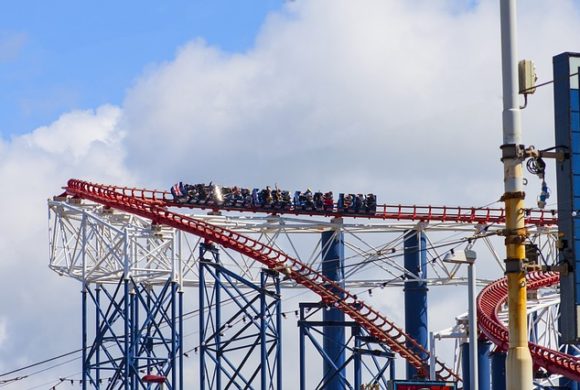
While many Tennesseans enjoy visiting amusement parks every year with their families or friends, thousands of people are seriously injured during their visits. The regulations governing amusement park safety are inconsistent across the U.S., and some parks may be more dangerous for visitors than others. It is important for consumers to be aware of the risk of accidents at amusement parks and the regulation inconsistencies involved when they are choosing a destination. When victims are injured at amusement parks, a personal injury attorney may work to help them to recover damages for their losses.
Amusement Park Injuries
According to the U.S. Consumer Product Safety Commission, an estimated 30,900 people went to the emergency room for treatment of injuries that were sustained in amusement parks in 2016. Since 2010, 22 victims have been killed while visiting the parks with some tragic stories making national news. Because there is no formal reporting system in place, safety experts say that it is difficult to get a clear picture of the actual injury rate at the parks.
Regulations and Enforcement Are Inconsistent
Individual states each have their own regulations and laws regulating amusement parks, but some states do not have any regulations in place at all. There are also no federal laws governing amusement parks, and inspections of them are irregular. While the U.S. Consumer Product Safety Commission is in charge of enforcing regulations of mobile amusement parks like those that are set up at state fairs, enforcement is limited by rules the states in which they are used have in place. The CPSC lost its ability to inspect rides at fixed-site amusement parks in the 1980s, leaving inspection responsibilities strictly to individual states and parks.
Amusement Park Safety
A personal injury attorney may help victims who are injured, but it’s best to try to avoid injury in the first place. Amusement park visitors should follow safety guidelines while they are at the parks. They should adhere to all of the height, health and weight restrictions for the rides. Safety equipment, including seat bars and belts, should always be used, and guests should be careful when loading and unloading in and out of rides. Avoiding mall rides that do not have any padding underneath them is a good idea. Additionally, all riders should keep their hands and feet inside of the rides.
by Queener Law | Aug 11, 2017 | Auto Accident, Tennessee
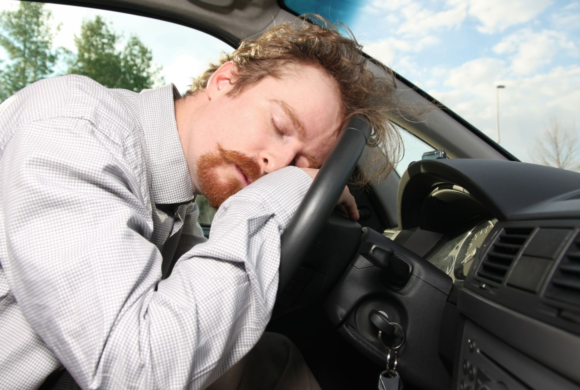
New technology is under development to reduce accidents caused by drowsy driving in Tennessee and elsewhere, which claim the lives of 6,000 people in the U.S. each year. The device is worn on the wrists of drivers, and it uses biometric data to sense when they are beginning to get drowsy. If they show these signs, the device will vibrate. If the drivers then start to fall asleep, the device sends electrical pulses that shock the drivers awake so that they can get off of the road. Some of the cases that a Nashville car accident lawyer handles involve drowsy driving crashes that have caused serious injuries or deaths when the drivers fall asleep behind the wheel.
How the Drowsy Driving Technology Works
The entrepreneur behind the company Creative Mode became concerned about the problems of drowsy driving after his friend fell asleep at the wheel and crashed into a tree, causing serious injuries. The entrepreneur then began working to create a new device that could help drivers to remain awake. He came up with a wearable device that he named Steer. Drivers wear the device on their wrists while they drive. After first taking a baseline reading, Steer takes biometric readings of the drivers, including heart rate and sweat production.
If a driver’s heart rate drops below the baseline reading by 10 beats per minute and the sweat secretion drops by one unit, the wearable device will vibrate to alert the driver that he or she is drowsy. If the driver’s heart rate subsequently falls by an additional three beats per minute and the sweat secretion decreases by another unit, the device sends gentle shocks that are strong enough to wake the driver up.
The idea behind using the shocks is that they increase the levels of serotonin in the brain, which causes drivers to awaken. The entrepreneur says that even if the devices wake the drivers up, they should pull off of the road and get some sleep to prevent automobile accidents rather than attempting to continue driving. The device has generated significant interest and more than 100 investors on Kickstarter are currently backing it. It is expected to retail at $230. Drivers can currently purchase Steer on Kickstarter for $130. A Nashville car accident lawyer may help victims who have been injured by drowsy drivers.

by Queener Law | Jul 19, 2017 | Auto Accident, Tennessee
Seat belts don’t always save lives and each year thousands of seat belts fail to protect the drivers and passengers who use them. While properly operating seat belts reduce the risk of serious injury or death by between 40-55%, it is estimated that up to 6,000 fatalities per year are the result of defective seat belts.
Causes of Seat Belt Failure
There are four common forms of seat belt failure, including seat belt latch failure, retractor failure, and spooling. Seat belt latch failure involves a latch that either falsely latches or that unlatches without warning. Retractor failure is similar and involves the failure of the locking mechanism that is supposed to restrict forward movement of the seat belt. This is commonly related to webbing defects which involves loose seat belt webbing that allows too much movement of the belt or causes the belt to snap when stretched. Finally, the mounting may be improperly secured to the vehicle which can cause it to snap off of the body of the vehicle and become a deadly projectile.
Of course, the number one reasons seat belts fail isn’t because of defect parts, it is because motorists and their passengers simply don’t use them. According to the CDC, half of teens between the ages of 13 and 19, as well as adults 20 to 44 who died in car accidents in 2015 were not wearing their seat belts at the time of the accident.
Liability for Seatbelt Failure
Liability for a seat belt failure may belong to the automobile manufacturer or the manufacturer of the specific part. For example, if investigative research by either party indicates that the seat belt contains faulty parts or design defects that make it prone to failure. Liability may also fall on any individual whose actions caused critical damage to the seat belt that then caused the seat belt to fail during an automobile accident.
Documenting Injuries
Seat belt failure is not always immediately clear following an accident. Indeed, many injuries may be misattributed to other causes when the real cause is a defective seat belt. For this reason, it is important to work closely with an attorney in Nashville TN to thoroughly review images from the accident, the accident report, and any medical records that indicate the presence of a seat belt failure at the time the accident occurred.