by Queener Law | Feb 15, 2016 | Tennessee, Trucking Accident
Two Nashville road crew workers ended their work day on January 30 in the hospital after the scaffolding they were on was struck by a semi-truck. The men were working on an overpass section of the interchange between I-65 and I-440.
The accident occurred in mid-afternoon, typically a less dangerous time for construction crews. The truck truck collided with the bottom of the scaffolding, causing it to detach from the overpass. One of the men fell to the roadway below, while the other was able to remain on the scaffolding.
“An accident like this shows the danger from tractor-trailers on the road today,” says truck wreck attorney Henry Queener. “An accident can happen anywhere in Nashville, causing serious injury or even death to the victims.”
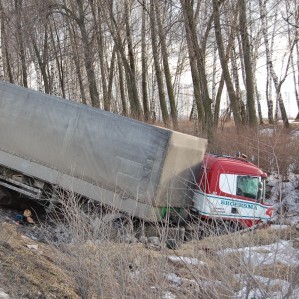
Damage to the truck’s trailer was extensive, with the roof being peeled off. The truck driver was not injured in the accident. Under Tennessee law, drivers must slow down or change lanes when construction workers are present. It is unclear at this time as to why the driver did not do so.
The Tennessee State Patrol responded to the accident and reported that the investigation into the accident would continue. No charges were filed against the driver of the tractor-trailer.
Both of the Tennessee Department of Transportation workers were transported to a local hospital for treatment and were expected to make a complete recovery. If the driver of the tractor trailer did not follow proper rules of the road, they may have cause to contact a truck wreck attorney to further investigate the case.
Being Saturday afternoon, impact on traffic flow was minor. Traffic remained backed up for a short time after the accident but was quickly cleared.
The identity of the workers and the truck driver involved in the accident were not released by the State Patrol.

by Queener Law | Feb 13, 2016 | Tennessee, Trucking Accident
Slippery roads and icy conditions are common sights during the winter months. With the encroachment of winter weather conditions, the importance of proper truck maintenance can’t be understated. From tires to turn signals, the safety systems modern semi-trucks are equipped with are designed to reduce the possibility that the truck will be involved in an accident. Even so, the Federal Motor Carrier Safety Administration reports that there has been a 20% increase in the number of truck involved accidents over the past decade.
It’s estimated to cost roughly 12 cents per mile driven to properly maintain a semi-truck. Annually, this amounts to roughly 10% of the total cost of operation. While this amount may seem significant, the cost of not maintaining a semi-truck is considerably higher as it can lead to accidents, injuries, and fatalities down the road.
Coupled with adverse weather conditions, neglected, or improperly conducted maintenance can become a dangerous combination. Mix in poorly maintained roads, traffic, and decreased visibility and a poorly maintained truck can quickly become a lethal instrument.
In 2007 the FMCSA released the Large Truck Crash Causation Study. The study examined the causative factors behind crashed that took place between April 2001 and December 2003. Of the 141,000 accidents that took place during that time, vehicle maintenance and poor environmental/weather conditions were cited as critical factors in nearly 10,000 accidents.
The study examined the overall conditions of the truck and estimated that brake problems were contributing factors in 41,000 accidents. These problems included worn pads, malfunctioning air compressors, disconnected cables, etc. It further showed that bald and crumbling tires contributed to 8,000 crashes. Combined, this means that poor vehicle maintenance was a factor in more than 1/3 of all accidents occurring during this time.
For comparison, bad weather and road conditions were cited as contributing factors in 29,000 crashes. With 20% of semi-truck accidents caused in part because of ice, snow, rain, fog, and poorly maintained roads; and brake and tire problems cited in 34%, the danger becomes obvious. So obvious in fact that law enforcement is stepping up inspection efforts to help mitigate the problem.
The Department of Transportation’s statistics show that of all traffic citations issued to truck drivers in 2012, 72% involved maintenance violations. The number was slightly higher in 2013 at 72.6%. Overall, the national average was 1.6 violations per vehicle inspection. The citations issued ranged from malfunctioning turn signals and misaligned mirrors, to improperly inflated tires and worn brake cables.
Of course, it is those drivers that law enforcement isn’t catching who are at greatest risk of becoming a fatality statistic. In 2011, the Department of Labor’s data showed that truck drivers experienced 24 fatalities per 100,000 drivers. Statistically, that made “Truck Driver” the 8th most dangerous job in America that year. Realistically, the 851 drivers who died represented the largest loss of life of all the occupations studied.
The vast majority of the deaths occurring within the trucking industry can be directly tied to neglected maintenance, poorly performed maintenance, and adverse weather conditions. Either of these three causative factors can lead to a crash by themselves. Combined, these factors will almost certainly lead to a crash.
These are issues the FMCSA regulations address by requiring drivers to use extreme caution when confronted with adverse weather conditions. In Tennessee, drivers failing to do so can be cited by law enforcement for failing to slow down when ice, rain, sleet, or low-visibility conditions are present. They may also be cited for failing to properly plan for stopping/turning on roads, driving without their lights turned on in fog or snow, or for operating their semi-trucks in high-wind conditions that make driving unsafe. Further, FMCSA regulations require that motor carriers and equipment providers must inspect, repair, and maintain their vehicles regardless of the financial costs involved in conducting this maintenance.
This includes all systems required for the safe operation of the vehicle. Further, drivers and companies are required to maintain records on their vehicles that clearly shows the vehicle’s maintenance history. In fact, it is largely because of these record keeping requirements that investigators have been able to show the direct links between maintenance, weather, and accidents.
Semi-truck accident lawyers and law enforcement understand the importance of enforcing these regulations which is why the state ranks 2nd in the nation for vehicle safety inspections. And, while the state’s truck involved fatality rate is dropping, it still ranks above the national average. With winter weather encroaching upon the state, now is the time for truck drivers to conduct any maintenance that has been neglected before the roads ice up, the winds start to blow, and the road ahead becomes less clear and a lot more dangerous.

by Queener Law | Feb 10, 2016 | Tennessee, Trucking Accident
ruck drivers throughout the nation spend countless hours driving in adverse weather conditions like high winds, ice and snow. Unfortunately, these road hazards frequently cause accidents that are catastrophic and sometimes deadly. The Michigan Center for Truck Safety, however, has created a solution that may prove to be extremely effective in reducing the number of truck accidents that result in devastating injuries and fatalities.
The use of innovative cold weather simulators help truckers identify potential dangers. These state of the art simulators have been around for a few years now, and an increasing number of both new and experienced truck drivers are coming away with lessons about their own habits and abilities in adverse weather conditions, as well as the capabilities and limitations of their massive vehicles. These simulators are designed to use a wide variety of scenarios and challenges that truckers often face under common cold weather road conditions. Demonstrating the effects of miscalculations and other errors helps drivers make real life adjustments to their driving behaviors, which is destined to help save lives.
Some of the scenarios that commonly cause truck accidents in cold weather months include:
- Following too closely
- Driving too fast for conditions
- Inexperience with driving in adverse weather conditions
- Overconfidence in the drivers abilities
- Failing to realize the limitations of the big rig in poor weather
Simulation of these scenarios enables truck drivers to realize the possible consequences of such issues without endangering them or other motorists on the road.
According to Nashville truck accident lawyer Henry Queener, “Requiring all commercial truck drivers to experience these types of cold weather simulations would be an optimal solution to help reduce the number of truck accidents on America’s roadways.” Unfortunately, it is not required by law for truckers to participate in simulation activities prior to operating big rigs in the United States.
by Queener Law | Feb 9, 2016 | Tennessee, Trucking Accident
Sharing America’s roadways with the big rigs is not just intimidating, it can often be deadly. According to the National Highway Traffic Safety Administration (NHTSA), there were 3,954 people who lost their lives to accidents involving large trucks in 2013, and an estimated 95,000 individuals were injured. Alarmingly, 71 percent of those killed and 72 percent of those injured were occupants of other vehicles.
(Article continues below Infographic)
Unfortunately, the state of Tennessee is not immune to the devastating effects of sharing the roads with the big rigs. There were 126 large truck related fatalities in 2013 in the state, and 92 of those were occupants of other vehicles. According to the Insurance Institute for Highway Safety (IIHS), one of the main reasons that passenger car occupants are more frequently injured or killed in large truck accidents is the vulnerability of individuals who are traveling in smaller motor vehicles.
Big rigs often weigh between 20 and 30 times as much as passenger vehicles, and they are significantly taller. A combination of the large trucks’ massive size, braking limitations and their numerous blind spots make smaller vehicles susceptible to becoming victims of the catastrophic damages caused by large truck accidents.
Tips to Stay Safe While Sharing the Roads with Large Trucks
Fortunately, there are measures that motorists can take to help avoid becoming involved inaccidents with large trucks.
- Avoid the “no zones” whenever possible. Large trucks have various blind spots that can prove dangerous to unsuspecting motorists. The largest of these is located on the passenger side of large trucks, but there is also a smaller blind spot located on the driver’s side, as well as in the direct front and rear of big rigs. A good rule of thumb is that if a motorist cannot see the trucker’s face in the side view mirror, it’s likely that the trucker can not see the driver either.
- Avoid sudden stops and lane changes when driving near large trucks. The average large truck weighs approximately 80,000 pounds when fully loaded, so a big rig does not have the same braking capability as a smaller passenger vehicle. At just 65 mph., it takes approximately 525 feet for a large truck to come to a complete stop.
- Be aware of wide right turns. Large trucks often need to swing left before making a right turn. Motorists should watch for blinkers and avoid passing trucks on the right.
by Queener Law | Feb 7, 2016 | Tennessee, Trucking Accident
There are roughly 3.5 million professional truck drivers in America. Each day they carry the goods and cargo that keep the economy going strong. It’s hard work. It’s long work. It’s tiresome work and there are efforts being made in Congress to make the work harder and the hours longer. Key changes tucked within the highway bill include the following:
Allowing Longer Trucks
Current law allows for the transport of two, 28-foot trailers. The bill passed by the House would allow the transport of two, 33-foot trailers. Should the Senate pass the bill, this will mean that trucks could be up to 91 feet long. That’s the equivalent of an 8-story building. Coupled with increased highway speeds around the country, that means more inertia, longer stopping times (roughly 252 feet as opposed to the current 230 feet), and a greater risk of accidents caused by both blind spots and drivers who are simply unable to stop their trucks in time to prevent an accident. It’s a common problem in cases handled byTennessee truck accident lawyers.
Lowering the Driving Age
Current law requires interstate drivers to be 21-years old before they can obtain a commercial drivers license. The House bill would have given states the authority to lower the minimum age for interstate truck drivers to 18. Had it passed, it would have meant that drivers with far less experience would have been given the responsibility of transporting cargo from coast-to-coast without the experience and skill to do so safely. Trucking industry advocates argue the move is necessary in order to offset the current shortage of truck drivers.
Currently, 49 states allow truck drivers to be as young as 18 as long as they don’t cross state lines. This is allowed even though statistics show that drivers under 21 are at greater risk for being involved in a fatality causing accident. The NHTSA’s statistics show that up to 19% of all fatality accidents involve a driver under the age of 21. While the proposal was removed from the highway bill, it was replaced with a pilot program involving military veterans with truck-driving training and experience. Data from this program will be used to determine whether it is feasible to reconsider lowering the driving age in the future.
Eliminating Rest Periods
Current law requires truck drivers to take two consecutive nights off every week. The House bill would remove that requirement and allow drivers to take a single night off. This will increase driver fatigue which is a leading cause of trucking accidents.
The dangers of these proposals are evident. Every year, nearly 4,000 people die, and thousands more are injured in truck related accidents. Since 2009, there has been a 17% increase in fatalities, and a 28% increase in injuries. These statistics should give legislators pause as they consider changing regulations that are designed to reduce the number of injuries at fatalities on American roads.
Removal of Safety Rating Information
Truck companies’ federal safety ratings are currently listed on the Internet where the public can view them at will. Proposed changes by trucking industry lobbyists would remove these from public view. These ratings show information from compliance with federal regulations that can impact a company’s insurance rates or dissuade customers from using a company for their cargo transportation needs. Should Congress grant this request, it will mean that shippers will not have full and complete information to review prior to making a decision on which company to hire.
Fatalities by the Numbers
The Federal Motor Carrier Safety Administration has declined comment on these proposals, however, the statistics compiled by the National Highway Traffic Safety Administration show just how dangerous these proposals could be. According to NHTSA data, 3,964 people were killed in crashes involving large trucks in 2013. This number has been steadily increasing since 2009. These numbers will increase should these changes to existing law occur. Not only will the changes mean longer trucks and longer hours, future changes could introduce younger and less experienced drivers into the mix. Taken together, these changes and potential changes in the future create a recipe for increased accident rates around the country.
Resistance from the State Legislatures
Legislators from Mississippi, Illinois, and Pennsylvania have announced they will vote to oppose these proposed changes to the law. In particular, they share the concerns of Tennessee truck accident lawyers regarding the extension of truck length and the increased weight they would carry. Citing both safety and infrastructure concerns, it’s likely that legislators within these three states will hold firm in their positions. Moreover, the public has made their position clear; according to Advocates for Highway and Auto Safety, 77% of motorists are opposed to sharing the road with longer trailers. It’s unclear how Tennessee’s legislature will react to the proposed changes, however, it’s notable that Tennessee Senator Lamar Alexander has voted in favor of them.

by Queener Law | Feb 2, 2016 | Tennessee, Trucking Accident
Pressure on semi truck drivers to stay on the road and deliver goods is causing an epidemic of semi truck accidents. The National Transportation Safety Board reports fatigue played a role in more than 20 percent of major accidents, many of which involved multiple vehicles or fatalities. Nationally there has been a push to regulate driver fatigue and eliminate some of the factors that lead to overly tired drivers, but change is slow in coming.
(Article continues below Infographic)
Causes Of Fatigue
Driver fatigue has roots in several behavior and environmental factors that a semi truck accident lawyer will examine.
Sleep
The primary cause of fatigue is a lack of sleep. On average, a semi truck driver only receives 5 hours of uninterrupted sleep a night, even though adults need 7-9 hours to be well rested.
Drivers face a lack of sleep because they feel pressure to stay on the road. Companies institute tight deadlines and only pay for the miles a driver covers, so it’s tempting to falsify log books and reduce sleep time for many drivers. Further complicating the problem are environmental factors, like heat and an uncomfortable sleeper cabin, which reduce the quality of the sleep drivers get.
Irregular Hours
Human beings are most productive during daylight, but daytime driving is not always possible for truck drivers. Federal driving regulations established a 11 on/10 off rule that limits drivers to 11 hours of driving after 10 full hours off duty.
Instead of sleeping on a normal, predictable schedule, drivers find themselves sleeping at odd or different hours every day. The changes in sleep pattern make it difficult for drivers to fall asleep, so much of their downtime is spent awake.
Highway Hypnosis
Long-haul drivers face countless miles on roads with little change of scenery for hours. The problem gets worse when they drive at night. As they drive, their mind starts to wander, and soon they enter a dissociative trance, where they are mentally disengaged with the road.
Fatigue exacerbates highway hypnosis, by causing disengaged drivers to fall asleep at the wheel. As many as 1 in 4 drivers report nodding off while driving, and many of them blame the monotonous nature of long-haul driving.
Though drivers are most often held liable for accidents involving driver fatigue, trucking companies can also be brought into the lawsuit. Companies that are shown to ignore complaints of fatigue from drivers or scheduled a driver to be on the road in violation of drive time rules can be held at fault.
Fatigued drivers increased the total number of semi truck accidents, and contributed to the rise in cost for each accident.
The Cost Of Semi Truck Accidents
A semi truck accident lawyer pursues two types of damages in an accident.
Economic
Economic damages are those directly related to medical treatment and loss of wages as the result of someone else’s negligence. The sheer size and weight of semi trucks substantially increases the risk of serious injuries or death in cases a semi truck accident lawyer handles. The Federal Motor Carrier Safety Administration found accidents involving semis carried an economic cost of more than $330,000, a number that ballooned to $1.2 million when a truck pulled multiple trailers. In the event of a fatality, the FMCSA reports damages of over seven million on average.
Non-Economic
Pain and suffering, loss of use or enjoyment, and emotional distress are all considered non-economic damages a semi truck accident lawyer can seek. In 2015, the Tennessee Supreme Court ruled non-economic damage caps unconstitutional, opening the door for ever larger payouts to victims of fatigued drivers.
Drive Time Regulations
The problem of driver fatigue is so great that the government is working overtime to solve the issue. Because of the inter-state nature of long-haul trucking, oversight of drive time regulations falls into the hands of the federal government. The rules include:
- 11 Hour Limit: Drivers may only drive for 11 hours in a row after an uninterrupted 10 hour break.
- 14 Hour Limit: Drivers are limited to 14 total hours of drive time and on-duty (ie. loading, inspection, and maintenance) time before a 10 hour break
- 60/70—7/8 Rule: Drivers are limited to 60/70 hours of duty time in a 7/8 day period. The clock continues until the driver takes a required 34 hour break.
- Rest Breaks: Drivers must be off-duty for no less than 30 minutes on a break
Drivers are required to keep a log book of all of their activities that can be used by a semi truck accident lawyer to show violations of drive time regulations.
Semi truck accidents continue to be a problem on Tennessee roads, causing serious property damage and injuries. By attacking the causes of driver fatigue, and using a semi truck accident lawyer to seek damages after an accident, the road can become a safer place.Categories