
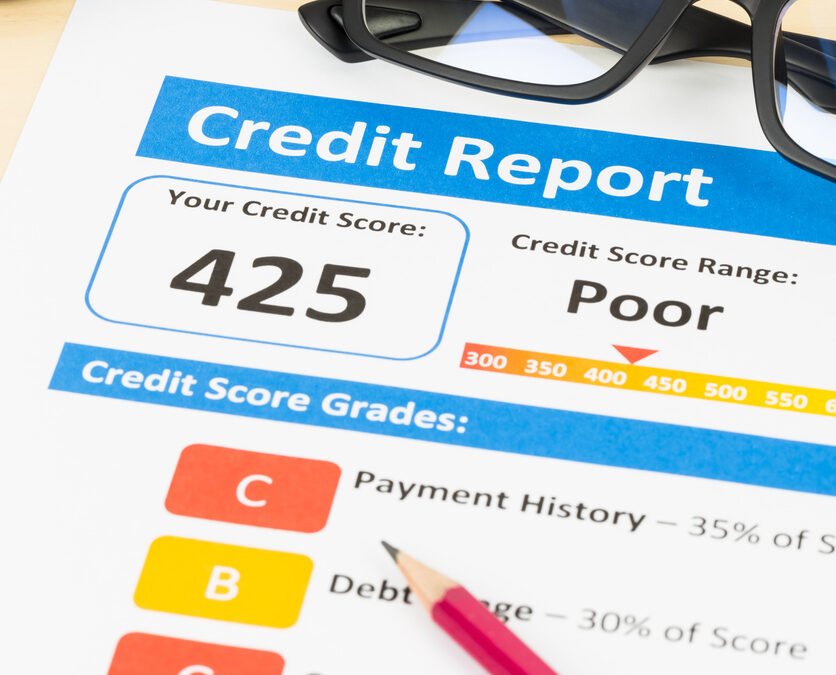
How Your Credit Score Can Affect Car Insurance Rates—and How to Protect Yourself From Underinsured Drivers
How Your Credit Score Can Affect Car Insurance Rates—and How to Protect Yourself From Underinsured Drivers
For many drivers, the cost of car insurance is becoming a major part of the household budget. Some people may not realize that their credit history can affect what they pay for auto insurance.
In Kentucky, insurers may use credit-based insurance information as one factor in underwriting and rating automobile insurance. A credit-based insurance score is different from the traditional credit score used by lenders, but it is based in part on information contained in your credit history.
That matters because when insurance becomes more expensive, some drivers may respond by purchasing lower coverage limits or eliminating optional protections simply because they cannot afford a more comprehensive policy.
Unfortunately, that can leave drivers financially vulnerable when they are involved in a serious car wreck—particularly when the person who caused the crash does not have enough insurance to cover the resulting damages.
How Does Your Credit Score Affect Your Car Insurance?
A credit-based insurance score helps insurers evaluate the likelihood of future insurance losses. It is not the same thing as the traditional credit score a bank might use when deciding whether to approve a loan.
According to the National Association of Insurance Commissioners (NAIC), insurance companies may consider factors such as payment history, outstanding debt, length of credit history, new credit and credit mix when developing a credit-based insurance score. Insurers also consider many other factors, including driving history, claims history, location, vehicle type, mileage and the coverage and deductibles you select.
In Kentucky, insurance risk scores are permitted, although Kentucky law prohibits an auto insurer from refusing to issue, renew, or cancel a policy solely because of a person’s credit history.
As a result, two drivers with similar vehicles and driving records can receive different insurance quotes.
Why Higher Insurance Rates Can Create a Bigger Problem
The concern is not simply that one driver pays more than another.
For families already struggling with rising costs, higher insurance premiums can force difficult decisions.
A driver may choose:
- Lower bodily injury liability limits
- A higher deductible
- Less optional coverage
- Lower uninsured or underinsured motorist limits
- Fewer vehicles or drivers insured under the policy
- Or, in extreme situations, allow coverage to lapse
The NAIC recognizes that choosing lower coverage or higher deductibles can reduce premiums, but those choices also mean the policyholder is accepting more financial risk.
That creates a troubling cycle: the more expensive insurance becomes, the more tempting it can be to purchase only the minimum coverage necessary to legally drive.
And Kentucky’s minimum liability requirements may not be enough to fully compensate someone who suffers serious injuries.
Kentucky’s Minimum Auto Insurance May Not Be Enough
Kentucky law generally requires minimum liability coverage of $25,000 per person, $50,000 per accident for bodily injury, and $25,000 for property damage, commonly called 25/50/25 coverage. Kentucky also permits a $60,000 single-limit policy.
While those limits may satisfy Kentucky’s legal requirements, they can be quickly exhausted after a serious collision.
Consider what can happen after a major wreck.
You could have:
- Emergency medical treatment
- Hospital bills
- Follow-up appointments
- Physical therapy
- Prescription expenses
- Lost wages
- Future medical treatment
- Permanent injuries
- Reduced ability to work
- Pain and suffering
- Property damage
A $25,000 liability limit can disappear quickly when medical treatment is extensive.
Another problem is that the at-fault driver’s insurance limits are generally the maximum amount the driver’s insurance company will pay under that liability coverage.
What happens when your damages are worth significantly more than the insurance available from the person who caused the wreck?
That is where your own insurance coverage can become extremely important.
Protect Yourself From Underinsured Drivers
One of the most important protections you can discuss with your insurance agent is underinsured motorist coverage, commonly called UIM coverage.
Underinsured motorist coverage can provide protection when another driver is responsible for your injuries but does not have enough liability insurance to fully compensate you.
Kentucky law provides for underinsured motorist coverage and requires insurers to make UIM coverage available to insureds upon request, subject to the policy’s terms and conditions.
For example, imagine that you are seriously injured in a collision caused by another driver.
The other driver has only $25,000 in bodily injury coverage, but your damages are substantially greater than that amount.
Without adequate additional protection, you may face a significant gap between the value of your claim and the insurance money available from the at-fault driver.
Your own UIM coverage may help protect you from that gap, depending on the specific language and limits of your policy.
Uninsured Motorist Coverage Matters Too
Underinsured drivers are not the only concern.
Some drivers may have no insurance at all, even though Kentucky law requires motorists to maintain the required minimum insurance coverage.
Uninsured motorist coverage can provide another layer of protection when the at-fault driver does not have applicable liability insurance.
When reviewing your policy, it is important to understand both uninsured motorist (UM) and underinsured motorist (UIM) coverage and the limits you actually carry.
Do not assume that having “full coverage” automatically means you have enough protection.
“Full coverage” is not a precise legal term that tells you how much liability, uninsured motorist, underinsured motorist, medical or other coverage you actually have.
Your declarations page matters more than the phrase “full coverage.”
How Much Insurance Should You Carry?
No single amount of coverage is right for every driver.
Your insurance needs may depend on factors such as your income, assets, vehicle, family situation, medical needs, driving habits, and the amount of financial risk you are willing and able to assume.
However, one important question is:
If another driver seriously injured you tomorrow, would your current insurance policy provide meaningful protection if that driver had little or no insurance?
That is a question worth asking before a wreck—not after one.
When talking with your insurance agent, consider asking:
- What are my bodily injury liability limits?
- What are my uninsured motorist limits?
- What are my underinsured motorist limits?
- Can I increase my UIM coverage?
- Do my UM/UIM limits provide the protection I think they do?
- What deductibles do I have?
- What coverage am I giving up to save money?
- Does my policy have any exclusions or limitations I should understand?
A few minutes reviewing your policy could make a significant difference if you are ever seriously injured.
Check Your Credit Report for Errors
If your insurer uses credit-based insurance information, errors in your credit report could potentially affect your insurance rating.
The NAIC recommends reviewing your credit reports and disputing inaccurate information. Consumers can obtain their credit reports through AnnualCreditReport.com.
You can also ask your insurance company whether credit-based insurance information was used when determining your premium and what options may be available if your credit circumstances change.
Some insurers may reconsider premiums after certain extraordinary circumstances, although the availability of such programs depends on the insurer and applicable state law.
Don’t Let the Cost of Insurance Leave You Unprotected
Everyone wants to save money on car insurance. That is understandable.
But the cheapest policy isn’t necessarily the one that provides the best protection.
Reducing your premium by lowering coverage may save money today, but it could leave you responsible for substantial losses after a serious wreck.
This is especially important when you consider how many drivers may carry only the minimum insurance required by law.
You cannot control how much insurance the other driver carries. But you can take steps to protect yourself from the financial consequences of an uninsured or underinsured driver.
Review your policy. Know your limits. Ask about UM and UIM coverage. And make sure you understand what you are actually paying for.
What If You Have Already Been Injured by an Underinsured Driver?
If you have been injured in a car wreck, do not assume that the other driver’s insurance policy is the end of the story.
There may be additional insurance coverage available under your own policy or other applicable policies, depending on the circumstances of the collision and the language of the insurance contracts involved.
Kentucky law also has specific rules about settlements with an underinsured motorist and preserving potential UIM claims. For example, Kentucky law provides procedures for notifying the underinsured motorist insurer before certain settlements are finalized.
Because insurance coverage issues can become complicated quickly, it is important to understand your rights before signing a release or accepting a settlement.
Queener Law Can Help After a Kentucky Car Wreck
At Queener Law, we understand that dealing with insurance companies after a car wreck can be overwhelming—especially when you are injured and trying to determine whether there is enough insurance coverage to compensate you for your losses.
If you have been injured because of another driver’s negligence, our team can investigate the crash, identify the available insurance coverage, and help you understand your legal options.
Don’t assume the first insurance offer is all you are entitled to receive.
If you or a loved one has been injured in a car wreck in Kentucky, contact Queener Law Injury Law for a consultation.
Queener Law Injury Law
Your Injury. Your Rights. Your Fight.